How to Check the Gate in a Deer Fence: Gaps, Posts and Latch
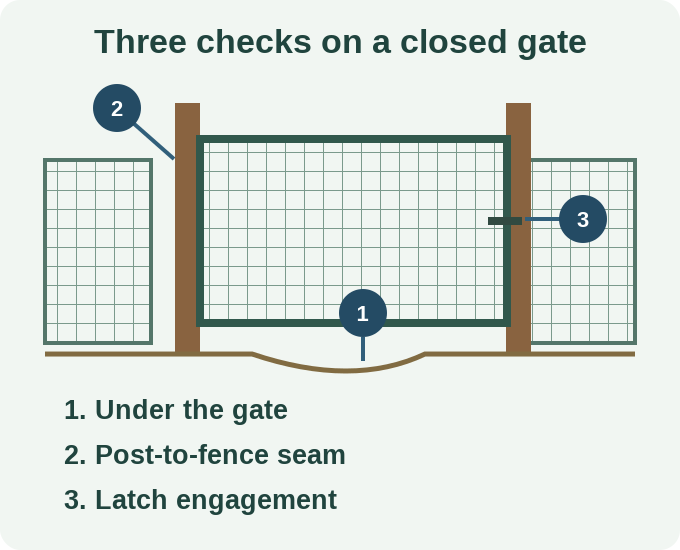
Start with the gate closed. Look under the gate, beside both posts and across the top where the gate meets the fence. Then verify that it latches during normal use. A good fence can still have an opening at the gate, but an opening alone does not prove how a deer entered.
1. Take one photograph that shows the whole opening
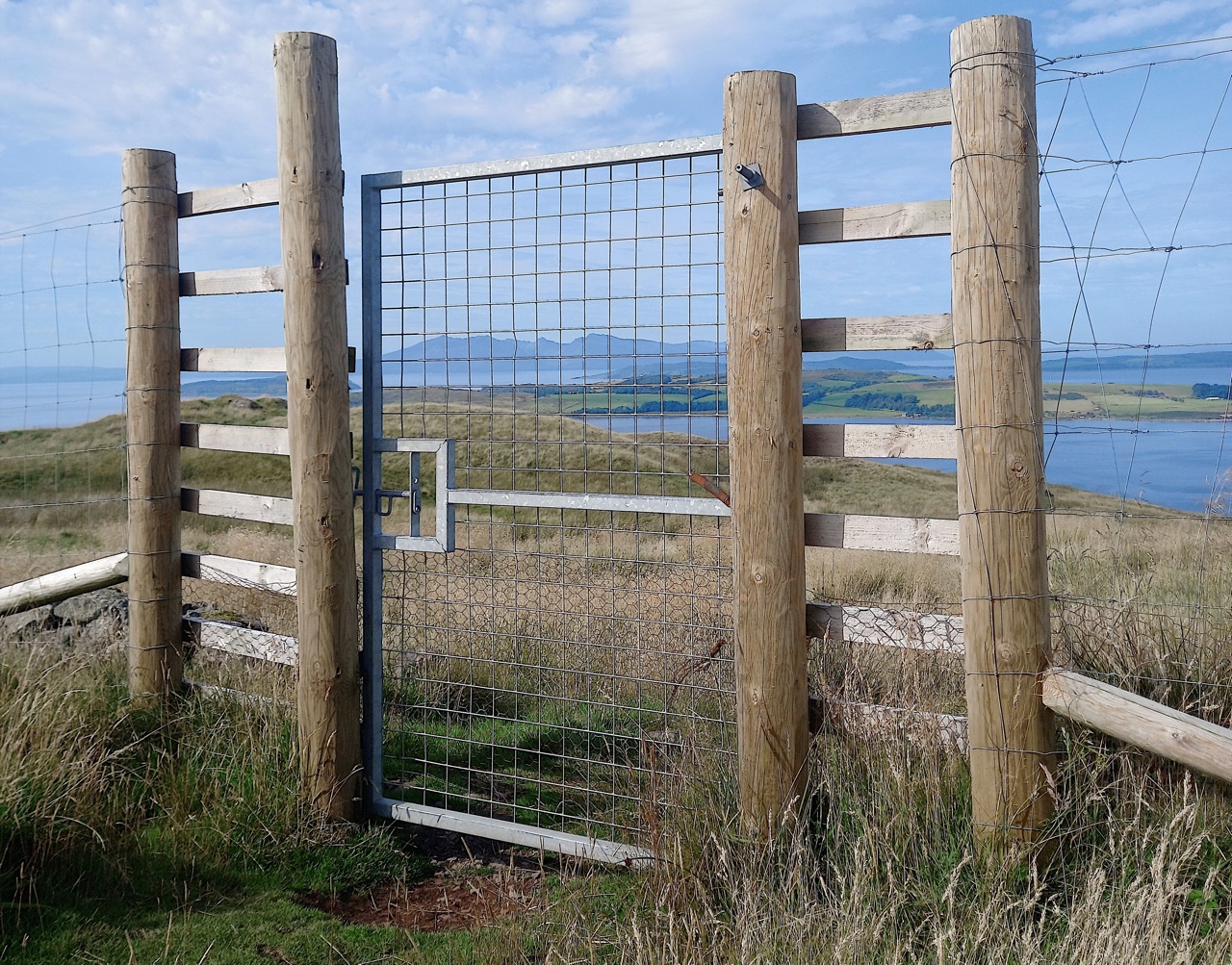
From a safe position outside the enclosure, photograph the closed gate, both posts and enough fence on both sides to see where they meet. Look for a gate that is noticeably lower than the adjacent fence, mesh that stops short of a post, or a new gap where the ground dips under the bottom edge. Take a closer picture from a safe position if the wide view doesn't show it. Compare the two sides and note whether the opening is new or has been there since the gate was installed.
2. Check the bottom and the ends as a single fence line
Follow the closed gate from hinge post to latch post. Note a low spot under the leaf, loose mesh at a post, an open seam between two leaves if present, or a point where the fence has separated from the post. Give the fence contractor the location and a photo of each opening. Rutgers Cooperative Extension notes that deer can use openings under gates and between their edges; its vineyard examples are not a universal clearance specification for your gate.
If the gate is leaning, the post is loose, or a hinge or bracket looks damaged, don't move the gate to see how bad it is. Keep people clear and arrange qualified repair. If you see corrosion near a support, the guide to documenting gate rust before repainting explains what to photograph without disturbing the connection.
3. Verify it actually stays closed after normal use
For a stable, manually operated gate that you can use safely, close it as you usually do and check visually that the latch engages before you walk away. A leaf against the post can look closed while the latch has missed its catch. Ask the people who use the gate most often when it gets left open: during yard work, deliveries or moving equipment, for example. Fix the recurring reason with your installer instead of relying on a reminder nobody follows.
4. Choose the next step based on what you found
If the leaf is secure but the latch misses, document where it fails to meet the catch. If the concern is a dip under the gate or a break at a post, ask how the repair will close that route without preventing normal gate movement. A visible opening is a lead, not proof of a wildlife entry route. If browsing continues after the gate closes reliably and obvious openings are addressed, ask your local extension office about other access points and the suitability of the overall fence. Don't add loose mesh, improvised wires or sharp objects at the opening.
Sources4
- Rutgers Cooperative Extension: deer damage control in vineyards
- University of California IPM: deer and fences
- Deer fence gate · Raibeart MacAoidh · CC BY-SA 2.0 · Cropped, resized and compressed as JPEG. Adapted photo: CC BY-SA 2.0.
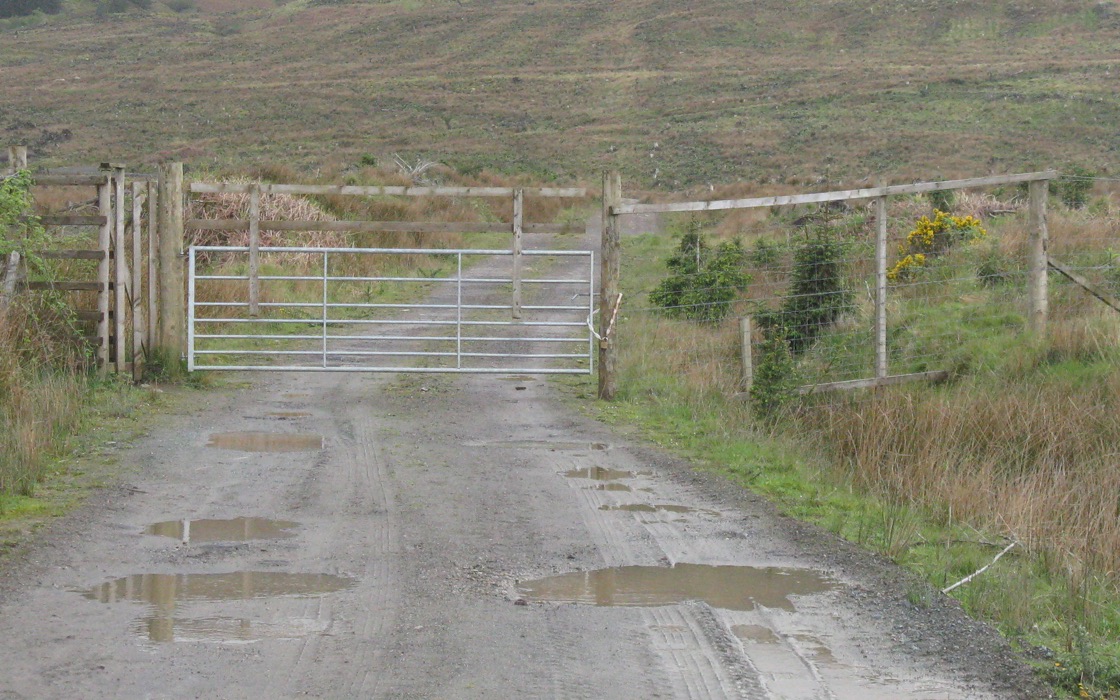
- Deer fence, with gate · M J Richardson · CC BY-SA 2.0 · Cropped, resized and compressed as JPEG. Adapted photo: CC BY-SA 2.0.
Related Posts
 Practical Guide
Rust on a Driveway Gate: What to Check Before You Repaint
Document where rust appears on a driveway gate, recognize when to stop using it, and know what to ask before approving paint or repair.
 Practical Guide
Swing gate on an uphill driveway: What to show the installer
Map how a sloped driveway changes a swing gate’s clearance. Learn what to photograph, where to check the swing, and what to ask before ordering.
 Practical Guide
Before Replacing a Farm Gate With a Cattle Guard, Plan the Bypass
Before replacing a farm gate with a cattle guard, map vehicle traffic, livestock movement and the separate gated route your entrance may still need.